
How to Choose Abstract Art for Your Home
Choosing art for your home can feel oddly high-stakes.
You might fall in love with a painting, then immediately start second-guessing yourself. Is it too big? Too small? Too bold? Will it work with the room? Will you still love it in a year?
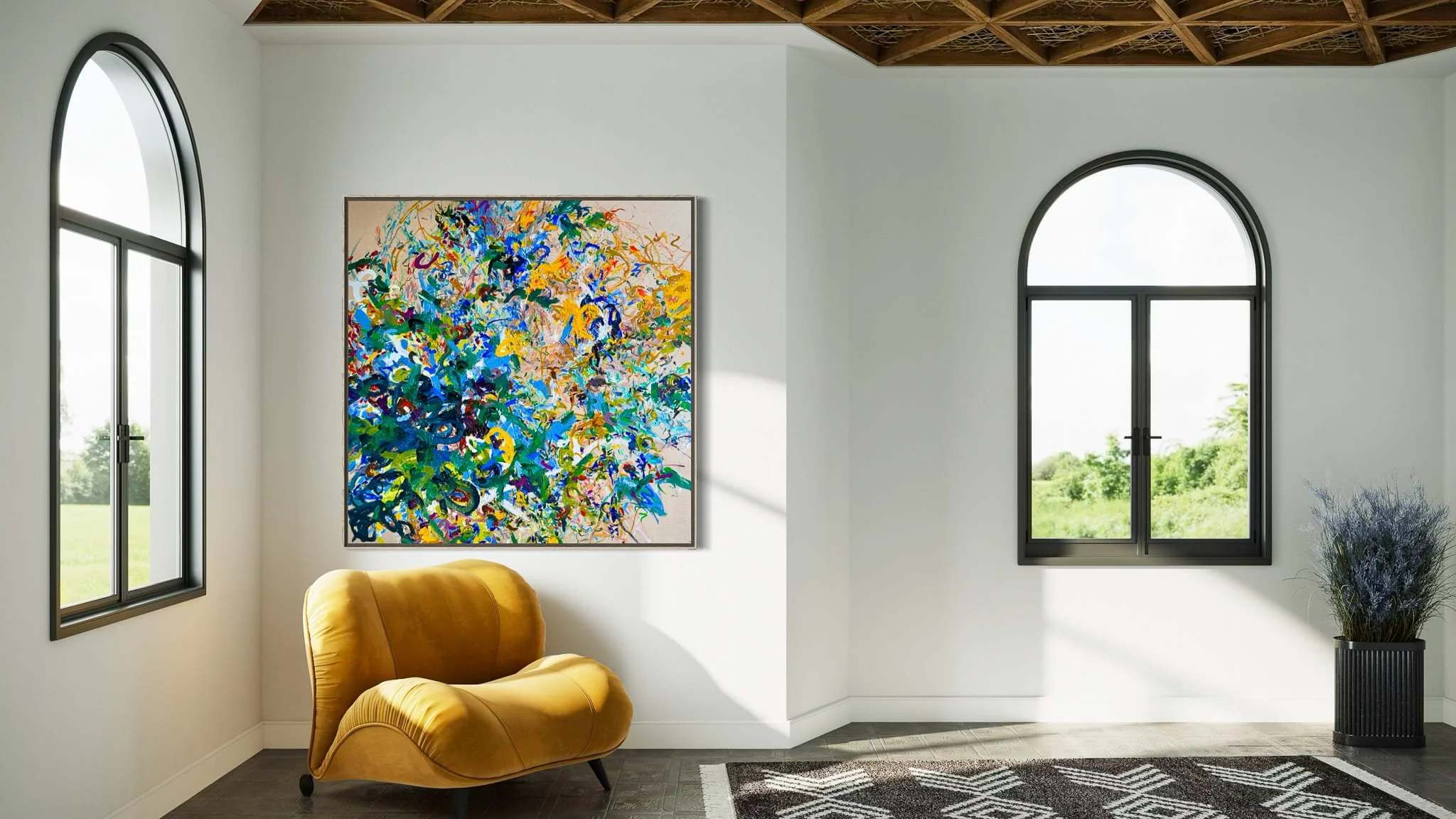
If that sounds familiar, you’re not alone. The good news is that choosing abstract art does not need to feel intimidating. The right piece isn’t just something that fills a wall — it can bring energy, emotion and individuality into your space, and most importantly makes your home feel more like yours!
-
Before you think about size, colour or placement, ask yourself one simple question: How do I want this room to feel?
Calm and grounded? Uplifting and energised? Warm and cocooning? Bold and expressive?
Art does more than finish a room visually. It shapes the atmosphere. A painting can soften a space that feels stark, bring confidence to a room that feels flat, or add movement to somewhere that needs life.
That is why I always think feeling comes first. If a piece makes you pause, smile, breathe deeper, or feel something shift in you, that response matters.
The right painting does not just sit on the wall. It changes the room.
-
One of the biggest worries people have when buying art is getting the size wrong. In my opinion this is possibly one of the main starting points, and for good reason: size is one of the most common buying hesitations, and getting it right is an important factor.
If in doubt, most people go too small. Art needs enough presence to shift the energy of a space.
These few simple guidelines can help:
Above a sofa or bed
A good starting point is artwork that is around two-thirds the width of the furniture below it. That usually gives enough presence without feeling cramped.Tall, narrow walls
Portrait-shaped paintings work beautifully here. These spaces often suit a piece with height, movement and a sense of flow.Large empty walls
This is where people often go too small. A single confident painting can be far more powerful than several hesitant choices.Hallways and smaller spaces
Smaller original works can be brilliant here. They add colour, rhythm and little pockets of joy in places that are often overlooked.My simplest tip
Use masking tape or paper to mark out the size on the wall before you buy. It is one of the easiest ways to get a real sense of scale.If you are looking for something with real presence, explore my Large Original Abstract Paintings page.
-
A lot of people worry about whether a painting will “go” with their home. What style should you follow modern and minimal, traditional, bohemian, industrial, and coastal — all of which are a useful starting point, even if the final choice should still feel personal.
I think there is a difference between art that matches a room and art that truly belongs in it.
If your home is calm and minimal, you may be drawn to work with space, softness or quieter colour. If your interiors are more layered and expressive, you may want something bolder, more textured or more playful.
But contrast can be just as powerful as harmony.
Sometimes the painting that works best is not the one that disappears into a room. It is the one that wakes it up.
So yes, notice the colours, textures and mood already in your home. But do not let décor become a cage. Art is allowed to have a voice of its own.
If you are styling a shelf, smaller room or gallery wall, take a look at my Small Original Abstract
-
A few simple things make a big difference:
Hang it at a comfortable height
In most rooms, artwork feels best when it is hung around eye level rather than floating too high above furniture. Check out my blog on tips for hanging art.Give it room
If you are grouping works together, leave enough space between them so each piece can breathe.Think about its role in the room
Is it creating a focal point? Softening a hard space? Bringing movement to a quiet room? Once you know what the painting is doing, placement gets easier.Do not underestimate the frame
If you are choosing a framed work, think about whether you want the frame to blend quietly or add another layer of contrast. -
You can think about wall size, colour palette and placement. All of that is useful. But at some point, the real question becomes:
Do I love this enough to live with it?
Not because it is safe.
Not because it ticks every practical box.
Because it speaks to you.The art you live with should not just fill a gap. It should make you feel something every time you walk past it. It should bring energy, calm, memory, possibility, or joy.
If a painting keeps drawing you back, there is usually a reason.
-
Your home is not a showroom. It is where your life happens.
The art you choose can make a space feel more alive, more expressive, more grounded, more joyful, and more personal. That is why I believe the best art is never just decorative.
It has presence.
It has soul.
It says something.So start with feeling. Think about size and placement. Notice the room. But trust your instinct too.
Because the right painting does not just sit politely on the wall.
Chosen well “ it makes your walls dance!”
If you are looking for original abstract art for your home, you can explore my Large Original Abstract Paintings, browse my Small Original Abstract Paintings, or visit 1 of 1 Galleryin Braunton, North Devon to experience the work in person